Showing posts with label Kayak Fishing in Singapore. Show all posts
Showing posts with label Kayak Fishing in Singapore. Show all posts
Tuesday, 20 August 2013
I remember doing all the wrong things on the kayak until i watched this video...
I particularly like the one about where your head goes, your body will follow. Hope that we can learn from the videos instead of doing things the wrong way. And on a kayak out at sea, you certainly don't want to make too many silly mistakes, especially falling off the kayak!

Sunday, 11 August 2013
Transformers...more than meets the eye
The fact that it is extremely portable and fast to set up as compared to other inflatable kayak (without the pumping of air) makes this kayak an attractive buy.
The down side is that being a light kayak it may not be stable if you are paddling in rough waters where the waves might knock you over and capsize your kayak.
Monday, 29 July 2013
Reef at Pulau Jong - southern island
Every weekend is an adventure...stop dreaming, start living it :)
It's a good way to exercise too!
Wednesday, 17 July 2013
Transparent kayak anyone?
 | ||
| Transparent kayak anyone? |
 |
| Underwater world... |
Kayak fishing can be a relaxing sport that brings you up close to the fishing spot without spooking the fishes away (as compared to a boat with a motor) and allows you to fish in reefs where boats dare not enter.
During low tide at some of Singapore's reef, i have seen corals up close about 0.5m from the side of my kayak and i just enjoy the rich marine life that Singapore waters offer.
But of course IF i had a transparent kayak as featured here, it'll make kayak fishing alot more enjoyable, in my opinion :) But then again, i might be too distracted and keep looking downwards instead of fishing....
Oh well, no time for day dreaming....time to plan for my next kayak fishing trip!

Wednesday, 10 July 2013
Kayak Fishing Starter Kit
You have gotten your first kayak, now what?
Here are the BASIC ITEMS that you need to get started on your kayak fishing adventure!
1. Paddle

(Unless you are using a leg-paddling kayak, you will definitely want to choose a light-weight paddle. Every stroke counts when you are paddling and a heavy paddle will only add to fatigue)
2. PFD = Personal Flotation Device aka Life Vest

(Be sure to get the right size as you do not want to slip out of the PFD because it is too loose. There are many choices of PFD from the cheap $15 orange life vest available at beach road army market to the PFD fishing vest with a lot of pockets for your fishing tackle and the self-inflating PFD. Each has it's own pros & cons. The PFD fishing vest allows you to do away with a tackle box on board your kayak but it is bulky and hot while a self-inflating PFD is very light and cooling but is expensive and requires some maintenance.)
3. Cooler box / Cooler bag

(You certainly don't want your kayak to smell after your trip so you need a place to store your bait and your catches, keeping it clean on board. If you have space on your kayak to secure a cooler box that would be most ideal. If you can't afford the space then a cooler bag is an alternate choice. Cooler bags are available at DAISO for $2)
4. Carabiner

(It may seem weird at first why carabiner is a necessary item on board a kayak, but if i tell you that my rod and reel dropped into the sea while kayaking, then it is not weird anymore. Yes, please use the carabiner to secure ANYTHING that can drop into the sea, especially your fishing tackle box & rods. They are available at DAISO for $2 for a pair)
5. Kayak Trolley

(It all depends on the distance from where you parked your car to the beach. Some inflatable kayaks are light enough to be hand carried to the beach but other kayaks may be too heavy. Anyway it is a good investment to have one kayak trolley as you can use it for a long time, just be sure to SECURE it on your kayak when you reach the beach to prevent it from dropping into the sea when you are kayaking, and rinse it after your trip to prevent rusting. One trolley can cost between $120-$200 depending on the design. I personally recommend a trolley with large pneumatic (air-filled) wheels as they function better on the sandy beach)
6. Cloth / Rag

(Imagine this scenerio, on your maiden journey you hooked on to a fish that put up a good fight. Eventually you tired the fish out and you reel it in towards the kayak. Now, where are you going to put the fish and remove the hook? You wouldn't want to be caught unprepared when that happens right? The quick solution is to have a thick piece of rag on board. You can lay it across your lap and place the fish on it and take your time to unhook the bugger. The rag will be able to protect you and your inflatable kayak from the spikes on the fish and also prevent any fish droppings / slime / blood from dripping on your kayak.)
7. Pump (for inflatable kayak only)

(Always store the pump in the same bag as your kayak, without the pump your inflatable kayak won't float so your trip depends on it. Depending on your preference, either hand pumps or foot pumps are available. One important thing to note for the pump is that you MUST NOT over pressurize the kayak. It can result in the kayak inflatable tubes to burst and rupture. Pump slowly when the kayak looks inflated already and then test the firmness of the kayak before you decide to pump more air in)
8. Waterproof Hand Phone Pouch
 (Handphone is definitely a necessity for your trip so that you can call for help when you need to. Always save the Police Coast Guard number in your phone and protect your phone using a waterproof pouch. You should test the pouch before using by putting a piece of tissue paper inside and then sealing it and submerge the pouch in water. If the tissue remains dry then the pouch is in good condition. Bare in mind that the pouch DOES NOT FLOAT so you better secure the phone to your PFD)
Well, these are the basic items you should have for a kayak fishing trip.
Of course along the way you might upgrade your kayak accessories to include things like a kayak anchor, bait table, rod holders or fish finder but for a start lets get the basics right and start fishing first!
Here are the BASIC ITEMS that you need to get started on your kayak fishing adventure!
1. Paddle

(Unless you are using a leg-paddling kayak, you will definitely want to choose a light-weight paddle. Every stroke counts when you are paddling and a heavy paddle will only add to fatigue)
2. PFD = Personal Flotation Device aka Life Vest
(Be sure to get the right size as you do not want to slip out of the PFD because it is too loose. There are many choices of PFD from the cheap $15 orange life vest available at beach road army market to the PFD fishing vest with a lot of pockets for your fishing tackle and the self-inflating PFD. Each has it's own pros & cons. The PFD fishing vest allows you to do away with a tackle box on board your kayak but it is bulky and hot while a self-inflating PFD is very light and cooling but is expensive and requires some maintenance.)
3. Cooler box / Cooler bag

(You certainly don't want your kayak to smell after your trip so you need a place to store your bait and your catches, keeping it clean on board. If you have space on your kayak to secure a cooler box that would be most ideal. If you can't afford the space then a cooler bag is an alternate choice. Cooler bags are available at DAISO for $2)
4. Carabiner
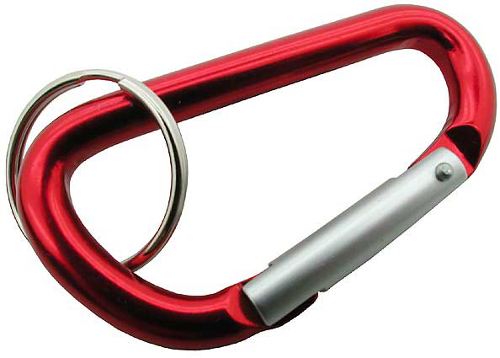
(It may seem weird at first why carabiner is a necessary item on board a kayak, but if i tell you that my rod and reel dropped into the sea while kayaking, then it is not weird anymore. Yes, please use the carabiner to secure ANYTHING that can drop into the sea, especially your fishing tackle box & rods. They are available at DAISO for $2 for a pair)
5. Kayak Trolley

(It all depends on the distance from where you parked your car to the beach. Some inflatable kayaks are light enough to be hand carried to the beach but other kayaks may be too heavy. Anyway it is a good investment to have one kayak trolley as you can use it for a long time, just be sure to SECURE it on your kayak when you reach the beach to prevent it from dropping into the sea when you are kayaking, and rinse it after your trip to prevent rusting. One trolley can cost between $120-$200 depending on the design. I personally recommend a trolley with large pneumatic (air-filled) wheels as they function better on the sandy beach)
6. Cloth / Rag

(Imagine this scenerio, on your maiden journey you hooked on to a fish that put up a good fight. Eventually you tired the fish out and you reel it in towards the kayak. Now, where are you going to put the fish and remove the hook? You wouldn't want to be caught unprepared when that happens right? The quick solution is to have a thick piece of rag on board. You can lay it across your lap and place the fish on it and take your time to unhook the bugger. The rag will be able to protect you and your inflatable kayak from the spikes on the fish and also prevent any fish droppings / slime / blood from dripping on your kayak.)
7. Pump (for inflatable kayak only)
(Always store the pump in the same bag as your kayak, without the pump your inflatable kayak won't float so your trip depends on it. Depending on your preference, either hand pumps or foot pumps are available. One important thing to note for the pump is that you MUST NOT over pressurize the kayak. It can result in the kayak inflatable tubes to burst and rupture. Pump slowly when the kayak looks inflated already and then test the firmness of the kayak before you decide to pump more air in)
8. Waterproof Hand Phone Pouch

Well, these are the basic items you should have for a kayak fishing trip.
Of course along the way you might upgrade your kayak accessories to include things like a kayak anchor, bait table, rod holders or fish finder but for a start lets get the basics right and start fishing first!
Thursday, 30 May 2013
Kayak Paddling Stroke technique
Learning the right paddling posture will allow you to use the least amount of strength to get the most out of the distance covered while kayak fishing. What this means is that you can fish longer at sea without feeling tired, reach out to further fishing spots and reduce the likelihood of injuries due to wrong paddling techniques.
Important to learn the right paddling technique from the start of your kayak fishing adventures!
Wednesday, 22 May 2013
Maritime Port Authorities of Singapore Safety Guidelines for canoeing & Kayaking
Hey guys,
This is a summary of the safety guidelines provided by MPA for all kayakers. It is a great information kakis new to kayak fishing or those who never knew MPA had guidelines on kayaks.
For the actual copy you can refer to www.mpa.gov.sg/sites/pdf/safety_guidelines_canoes_kayak.pdf
A) PERSONAL SAFETY
1. Using a canoe or kayak requires a certain level of expertise, let alone fishing on one. MPA recommends that beginners should not do this sport alone, but to follow an experienced person until the person gained competency.
2. Extend your range / distance from the shore at comfortable stages, stay close to shore. Know your limitations and allow for fatigue during paddling. (In case you've run out of energy to paddle back to shore due to strong currents)
3. If you are not a competent swimmer, let the person accompanying you know so that he/she can assist you in an event of emergency
4. Do not drink & kayak at the same time
5. Under Regulation 52 of the Maritime and Port Authority of Singapore (Pleasure Craft) Regulations, the Maritime and Port Authority of Singapore (MPA) requires an individual to wear a proper life jacket/vest throughout the sport. If you fail to do so, you will require a license to kayak.
B) SAFE PRACTICES FOR CANOEING AND KAYAKING
1. Inform someone ashore of your intended location and duration of the trip. If you are not back at the intended time or uncontactable, the person can call for help.
2. Do not enter any of the prohibited areas for canoes and kayaks in Singapore (Refer to the previous post)
3. Beware of tides and currents. In the event of bad weather, return to shore immediately.
4. Canoeing and kayaking shall be carried out during the day.
5. Take note of the movements of other vessels at sea. These vessels have limited manoeuvring room therefore kayakers should cross the fairway only when it is safe to do so.
C) CHECK LIST FOR CARE AND MAINTENANCE OF SEA WORTHINESS
Canoe Etiquette
1. Never sit or lean on a canoe/kayak except in the designated seat area once the canoe/kayak is in the water.
2. Sitting in the seat area on land can cause the canoe/kayak to crack.
3. Never step over the body of the canoe/kayak. If you need to move to the other side, walk around the canoe/kayak.
4. Canoe/kayak should not be dropped or dragged, but set down lightly.
5. Do not place any heavy object in the canoe/kayak as it may cause dents.
Storage
1. Do not leave the canoe/kayak in the water.
2. When not in use, remove the canoe/kayak from the water and store it by turning the canoe/kayak over off the ground or hanging it from the ceiling. Do not turn the boat over and leave it on the ground as it may wear the tips over time.
3. Store the canoe/kayak in the shelter as long weather exposure will wear out the canoe/kayak.
4. Tie up the canoe/kayak during storage (outdoors) as they can be easily blown around by winds.
5. Cover the canoe/kayak with a tarp. Do not put a tarp directly on a craft if you are storing it outdoor. Due to the possibility of moisture being trapped between the tarp and hull, it is best to drap the tarp like a tent using supports, to prevent discoloration or other damage to the craft.
Maintenance
1. Paint or varnish your canoe/kayak to remove scratches or tarnished areas about once a year. You do not have to repaint or revarnish the whole canoe since this will only add weight and lead to premature cracking. Always remove the old finish before adding any new paint or varnish.
2. A good UV protectant will help slow the fading process. It also helps to maintain a slick finish, which helps to prevent scratches.
3. Treatment for protection on the inside of the hull is not recommended as it may cause the inside of the hull to be slippery.
4. Always inspect the canoe/kayak thoroughly before use. Check for visible damages after any incident.
D) EMERGENCY
1. In case of emergency, please contact any of the following agencies. It is good to save these numbers in your handphone:
Police Coast Guard at 6377 5539 or 6377 5540.
Maritime and Port Authority of Singapore at 6325 2488 or 6325 2489.
Sunday, 19 May 2013
Prohibited areas for Canoes and Kayaks in Singapore
Hi guys,
The following information is taken from Maritime and Port Authorities of Singapore and it is good information to all new kayakers to note in order not to get into trouble with the law and get fined. Kayak safely & responsibly! Nothing beats a great day fishing at sea but it sure ain't dying for!
1) All Anchorages channels and fairways are prohibited (See Annex 2)
2) The following areas are prohibited (See Annex 3)
(a) Jurong Island
(b) Pulau Busing & Pulau Bukom
(c) Pulau Sebarok and Shell SBM
(d) Sembawang Wharves & approaches
(e) Cafhi Jetty
(f) Changi Naval Base
(g) Selat Sengkir
(h) Pualu Satumu (aka Raffles Lighthouse)
(i) Southern Islands where live firing takes place
- Pulau Sudong
- Pulau Pawai
- Pulau Senang)
(j) Tuas Naval Base
(k) West Johor Straits from 2nd link to Sarimbun adjacent to SAF Live firing area
(l) Curise Bay
(m) Chek Jawa Wetlands
(n) Sungei Buloh Nature Reserve (there are 2 resident salt water crocodiles living there)
(o) West Jurong Channel
(p) Tuas Channel
(q) Tuas Channel
(r) Ferry terminal and piers
- Changi Point Ferry Terminal
- Changi Ferry Terminal
- Tanah Merah Ferry Terminal
- Marina South Pier
- West Coast Pier
(s) Tuas Explosive Jetty
(t) All port marine notice (PMN) working areas listed here which are updated regularly by MPA http://www.mpa.gov.sg/sites/port_and_shipping/circulars_and_notices/port_marine_notices.page
3) Exercise caution when in the vicinity of the tidal gates (in case of water discharge):
(a) Sungei Seletar
(b) Sungei Ponggol
(c) Sungei Serangoon
(d) Kranji Tidal Gate
(e) Pandan River
(f) Sungei Jurong
4) I'll throw in a free advice, don't attach anything to the floating buoy at sea, you will get fined as well by MPA.


The following information is taken from Maritime and Port Authorities of Singapore and it is good information to all new kayakers to note in order not to get into trouble with the law and get fined. Kayak safely & responsibly! Nothing beats a great day fishing at sea but it sure ain't dying for!
1) All Anchorages channels and fairways are prohibited (See Annex 2)
2) The following areas are prohibited (See Annex 3)
(a) Jurong Island
(b) Pulau Busing & Pulau Bukom
(c) Pulau Sebarok and Shell SBM
(d) Sembawang Wharves & approaches
(e) Cafhi Jetty
(f) Changi Naval Base
(g) Selat Sengkir
(h) Pualu Satumu (aka Raffles Lighthouse)
(i) Southern Islands where live firing takes place
- Pulau Sudong
- Pulau Pawai
- Pulau Senang)
(j) Tuas Naval Base
(k) West Johor Straits from 2nd link to Sarimbun adjacent to SAF Live firing area
(l) Curise Bay
(m) Chek Jawa Wetlands
(n) Sungei Buloh Nature Reserve (there are 2 resident salt water crocodiles living there)
(o) West Jurong Channel
(p) Tuas Channel
(q) Tuas Channel
(r) Ferry terminal and piers
- Changi Point Ferry Terminal
- Changi Ferry Terminal
- Tanah Merah Ferry Terminal
- Marina South Pier
- West Coast Pier
(s) Tuas Explosive Jetty
(t) All port marine notice (PMN) working areas listed here which are updated regularly by MPA http://www.mpa.gov.sg/sites/port_and_shipping/circulars_and_notices/port_marine_notices.page
3) Exercise caution when in the vicinity of the tidal gates (in case of water discharge):
(a) Sungei Seletar
(b) Sungei Ponggol
(c) Sungei Serangoon
(d) Kranji Tidal Gate
(e) Pandan River
(f) Sungei Jurong
4) I'll throw in a free advice, don't attach anything to the floating buoy at sea, you will get fined as well by MPA.


Wednesday, 17 April 2013
Peculiar Kayak-Fishing Experiences
This post is to list out some peculiar kayak-fishing experiences that i have encountered or witness since i started with kayak fishing. I'm sure many of us have our own story to tell so feel free to contribute as well!
1. An inflatable kayak was left in the sun as the fishio was tired after a session out at sea. Unfortunately the heat caused rapid expansion of air within the kayak and the kayak ruptured
2. Knocking over a box of lure and they fell to the bottom of the ocean
3. While paddling i hit my fishing rod and it ended up in the bottom of the ocean along with my reel.
4. Water leaking into the kayak halfway in the middle of the sea because the fishio using inflatable did not pump in enough air at the start of the trip. We had to do a rescue mission by using a hand pump to top up air at high seas!
5. Dropping my anchor only to realize that the rope was not long enough to reach the bottom of the sea floor.
6. Bait fish jumping over the kayak when they were chased by other predators
7. Landing an octopus on the kayak and wondering what to do with the ink stains
8. Accidentally hooking the front of the kayak and realizing that i cant reach it to unhook it
So what are your peculiar Kayak-fishing experiences? Do leave a comment below / share your blog on this post!
- Joab
Tuesday, 19 March 2013
Kayak Fishing in Singapore: Inflatable vs Hard-shell Kayak
From the internet, we can find discussions and numerous articles on inflatable kayak and hard-shell kayak.
However, we have been unable to find
one that compares both from Kayak fishing activity and in Singapore’s point of
view! Therefore, we have summarized some
relevant info we have gotten over the web and by talking with hobbyists
kayak-fishing in Singapore.
p/s: We do not sell kayaks but thought doing this comparison might draw more people to the sport in Singapore! Therefore, dear hobbyists and enthusiasts
2. or comment and leave your website to be linked to our sidebar! J
1. please comment and
share your views why you prefer your inflatable or hard-shell kayak
2. or comment and leave your website to be linked to our sidebar! J
Inflatable Kayak
|
Hard-Shell Kayak
|
||
Relevance
to Kayak Fishing
|
|||
Affordability
|
More well-received in Singapore due to storage issue, higher cost of kayak
|
Generally cost lesser or comparable to inflatable kayak in Singapore
|
|
Life-span
and Value for Money
|
Prone to punctures. Nothing is
worse than a kayak deflating when you are in the middle of the sea.
|
More durable due to tough material
outer shell
|
|
Tracking
|
Generally poorer tracking in rough
water
|
For fishing in rough water you
need a kayak that tracks well. Generally, tracks better than inflatable kayak
|
|
Maneuverability
|
Slower due to more drag in water
|
Better maneuverability and speed
|
|
Accident-Prone
|
For kayak fishing, equipment on
board like hooks and knives can puncture your kayak. Fishes and their sharp
fins may puncture your kayak too
|
Hooks and knives do not puncture a
hard-shell kayak
|
|
Repair
|
More often repairs required, can
be repaired with patches
|
Rare but expensive repairs
|
|
Gear
|
Lesser choices of gear
|
Wider choices of gear to mount on
and modify your kayak
|
|
Wrt
Kayak-Fishing Enthusiasts living in Singapore
|
|||
Activity
|
More often used for white-water
rafting (not avail in Singapore) if chosen over hard-shell kayak
|
Rugged and suitable for sea fishing in Singapore
| |
Size
|
May be folded and placed in car
boot
|
Difficult to attach kayak to roof,
but time required to attach kayak to roof is less than time inflating and
deflating a kayak
|
|
Storage
|
No space constrain
|
Space constrain in your house and
lift
|
|
Weight
|
Light-weight
|
Heavier, difficult to load /
unload from car roof rack
|
|
Suitability
|
Preferred for a beginner to the
sport
|
More for seasoned and serious
kayak-fishing enthusiasts
|
|
Portability
|
Suitable for those without cars
|
Suitable for those who drive and
have a roof rack
|
|
Setting
up
|
More intense set-up due to
unpacking and pumping air into kayak
|
Minimal setting up time
|
|
Maintenance
|
Requires user to hose down kayak thoroughly
to remove saltwater from the fabric and dry it with sponge or cloth followed
by sunning to minimize risk of rust and stench.
|
Only required to hose down kayak,
flip kayak over for storage upon drying to maintain hull shape. Most
sand and dirt should easily fall off.
|
|
Downtime
|
With Singapore’s humid weather,
drying a inflatable kayak will take 2-5 days.
|
Not applicable.
|
|
Spray
Protection
|
Generally do not offer spray skirt
and have to bail water out of kayak out by hand.
|
Offers spray skirt that keeps user
and his equipment dry
|
|
Efficiency
|
Generally performance is less
efficient; needing to exert more effort to steer and paddle
|
Less drag due to solid hull makes
it more efficient, less friction in the water. Some models come with leg
paddle for speed and less strenuous fishing trip!
|
|
Wind
stability
|
More stable in windy and rougher waters
|
Relatively less stable from experience
|
|
Links used to consolidate this article:
http://www.livestrong.com/article/458986-inflatable-vs-rigid-kayak/
http://www.fishkingkaki.com/
http://www.wat-the-fish.com
Subscribe to:
Posts (Atom)